Sunday, November 26, 2006
Having a stroke? Why you need a local hospital
Are you afraid of having a stroke (or heart attack) sometime in the future? Silly question, of course. No one plans these things. But just think about it for the moment, particularly if you live on the North Shore or in an area served by Kahuku Hospital. Imagine that the hospital was no longer there to take care of you.
So ok, here comes the unexpected, and what will happen to you (or your parents, grandparents or neighbors)?
According to the Centers for Disease Control and Prevention,
So often some time goes by before that call for help. It is essential that no further time be lost, because a stroke victim must be evaluated to see if it is appropriate for them to receive TPA, a medication that reduces the effects of some types of stroke. Imaging may be necessary to distinguish a stroke from other problems.
So just think of that ambulance stuck in traffic on its way to a distant hospital, which is possibly already overloaded.
Just imagine what it would mean if Kahuku Hospital did close. Then do what you can to prevent that from happening.
So ok, here comes the unexpected, and what will happen to you (or your parents, grandparents or neighbors)?
According to the Centers for Disease Control and Prevention,
Stroke is the third leading cause of death in the United States. Among survivors, stroke can cause significant disability including paralysis as well as speech and emotional problems. New treatments are available that can reduce the damage caused by a stroke for some victims. But these treatments need to be given soon after the symptoms start.Most of the time there is a quick reaction to symptoms of a heart attack. People know what chest pain, shortness of breath, or shooting pains in the arms, chest or back could mean. But with stroke, it may be some time before that crucial call to 9-1-1 is made. The victim may not be aware of slurred speech, fuzzy thinking, or problems with arms or legs.
Knowing the symptoms of stroke, calling 911 right away, and getting to a hospital are crucial to the most beneficial outcomes after having a stroke.
So often some time goes by before that call for help. It is essential that no further time be lost, because a stroke victim must be evaluated to see if it is appropriate for them to receive TPA, a medication that reduces the effects of some types of stroke. Imaging may be necessary to distinguish a stroke from other problems.
So just think of that ambulance stuck in traffic on its way to a distant hospital, which is possibly already overloaded.
Just imagine what it would mean if Kahuku Hospital did close. Then do what you can to prevent that from happening.
Tags:


Saturday, November 25, 2006
Kahuku Hospital closure comes even as nation experiences a hospital construction boom
A Wall Street Journal article raises alarms that hospitals in poorer areas are closing even as the nation experiences a boom in hospital construction. (WSJ requires a subscription, so read the article here or here).
What's the problem? The WSJ article begins:
The deaths that result when someone cannot make it to a far-away hospital don't make the news, but they certainly occur. Going back a couple of years, those who depended on maternity services at St. Francis West were in a similar situation when the hospital announced that it would shut down those services. See St. Francis West maternity services will close: With West Oahu service ending, area women must go downtown to give birth. You know that many of those babies didn't make it, but their names don't appear in headlines.
The medical and hospital crisis in Hawaii is deepening, and will call for city and state to come up with solutions. But just as he did when the issue of homeless shelters came up earlier this year, Mayor Mufi Hannemann has not stepped forward to help find solutions, he is trying to pass the burden on to others. In a Pacific Business News article the mayor offered only that someone else should do it:
There needs to be a viable long-term solution to avoid a predictable crisis in healthcare in this state. Doctors are leaving, in part due to reduced reimbursements and in part (I have been told) due to inadequate facilities. Instead of running away from the problem, the mayor might instead do something useful, like convene a task force to identify the issues (diagnosis), determine what can be done (prognosis), and then get busy putting in place a solution (cure). In other words, what is needed is to apply the medical model to prevent the affliction facing the people of the City and County of Honolulu.
There is talk that Hannemann may have higher ambitions. In that case, he might look to his image. It was Mufi who kicked out over 200 people from Ala Moana Park with no plan in place for their shelter, leading many of them to camp out on his doorstep in protest. He then ignominiously arrested the protest leaders, still avoiding any proposal of his own for a solution to the problem he had caused. Transit plans and the transit tax are now controversial, with no solution from the mayor for another problem he has caused: proposing a transit system he knew could not be paid for within the limits he promised.
The one thing predictable about the 12.5% excise tax increase is that it will further increase the ranks of the homeless and produce even more demand on the medical infrastructure. And now, as the strain on hospitals is reaching the breaking point (see also Hospitals Struggle with High Costs), the mayor's expectation may be that a miracle will provide a solution to Oahu's hospital crisis. There has been talk that the Kulima Resort people can do something to alleviate the crisis. That would be welcome, of course (assuming the development goes ahead), but stopgap solutions are not the answer.
Of course, the solution will fall to the legislature and governor to discover. That's not inappropriate. It's just too bad that our mayor is not part of the team.
What's the problem? The WSJ article begins:
A building boom under way in the U.S. hospital industry is sparking concern about economic and geographic disparities in health care.The idea that North Shore patients will have to travel long distances through increasingly heavy traffic for acute or regular care should raise alarm bells. See also, Flirting with disaster - Kahuku Hospital should not close on this blog.
Much of the construction is occurring in fast-growing suburbs, as hospitals target the most affluent, insured patients who can afford to pay for top care. At the same time, many urban hospitals - which often treat poorer people - are struggling financially, and scores have had to shut their doors.
The deaths that result when someone cannot make it to a far-away hospital don't make the news, but they certainly occur. Going back a couple of years, those who depended on maternity services at St. Francis West were in a similar situation when the hospital announced that it would shut down those services. See St. Francis West maternity services will close: With West Oahu service ending, area women must go downtown to give birth. You know that many of those babies didn't make it, but their names don't appear in headlines.
The medical and hospital crisis in Hawaii is deepening, and will call for city and state to come up with solutions. But just as he did when the issue of homeless shelters came up earlier this year, Mayor Mufi Hannemann has not stepped forward to help find solutions, he is trying to pass the burden on to others. In a Pacific Business News article the mayor offered only that someone else should do it:
The city is not equipped to run [an emergency] medical facility," Hannemann said. "What's needed is for others to step forward with funding and other resources to get such a center established.The reason hospitals in poorer or rural areas are closing is crystal clear--they are losing money and can't recoup it. A hospital can cure many ills, but not the continual spilling of red ink. Nor is it likely that a competent entity will come forward and take on that loss. It's not happening elsewhere, why should it happen here?
There needs to be a viable long-term solution to avoid a predictable crisis in healthcare in this state. Doctors are leaving, in part due to reduced reimbursements and in part (I have been told) due to inadequate facilities. Instead of running away from the problem, the mayor might instead do something useful, like convene a task force to identify the issues (diagnosis), determine what can be done (prognosis), and then get busy putting in place a solution (cure). In other words, what is needed is to apply the medical model to prevent the affliction facing the people of the City and County of Honolulu.
There is talk that Hannemann may have higher ambitions. In that case, he might look to his image. It was Mufi who kicked out over 200 people from Ala Moana Park with no plan in place for their shelter, leading many of them to camp out on his doorstep in protest. He then ignominiously arrested the protest leaders, still avoiding any proposal of his own for a solution to the problem he had caused. Transit plans and the transit tax are now controversial, with no solution from the mayor for another problem he has caused: proposing a transit system he knew could not be paid for within the limits he promised.
The one thing predictable about the 12.5% excise tax increase is that it will further increase the ranks of the homeless and produce even more demand on the medical infrastructure. And now, as the strain on hospitals is reaching the breaking point (see also Hospitals Struggle with High Costs), the mayor's expectation may be that a miracle will provide a solution to Oahu's hospital crisis. There has been talk that the Kulima Resort people can do something to alleviate the crisis. That would be welcome, of course (assuming the development goes ahead), but stopgap solutions are not the answer.
Of course, the solution will fall to the legislature and governor to discover. That's not inappropriate. It's just too bad that our mayor is not part of the team.
Tags:
Friday, November 24, 2006
Stories that disappear in the US press but are alive in Europe: CIA involvement in RFK assassination, and more...
It's interesting to watch a story spread around the European press but remain hard to find in US papers. On Monday this week the news that three CIA agents who had no business being there were spotted in photos and videos. The story was covered in the Guardian, Did the CIA kill Bobby Kennedy? and on the BBC, CIA role claim in Kennedy killing.
If you haven't heard of this already, check out the above articles.
Meanwhile, opednews.com has its own list of undercovered stories, What Else is the Mainstream Media Lying About? going beyond the 9/11 conspiracy theories and including an interesting link to this article claiming that "The US is tied for 53rd in the world for press freedom with Botswana, Croatia and Tonga."
Regardless of how you feel on each of these issues, wouldn't it be great to see some real discussion on them in the mainstream press?
If you haven't heard of this already, check out the above articles.
Meanwhile, opednews.com has its own list of undercovered stories, What Else is the Mainstream Media Lying About? going beyond the 9/11 conspiracy theories and including an interesting link to this article claiming that "The US is tied for 53rd in the world for press freedom with Botswana, Croatia and Tonga."
Regardless of how you feel on each of these issues, wouldn't it be great to see some real discussion on them in the mainstream press?
Tags:
Friday, November 17, 2006
IHT: Bush directed CIA interrogation methods
An article in the International Herald Tribune with a New York Times byline has not, for some reason, appeared in the New York Times itself. At least, not on their website or where Google could find it. And this is an article that should be widely available to Americans.
CIA acknowledges Bush signed secret directive on interrogating terror suspect provides a direct link between Bush, his network of secret prisons, and the methods used at those prisons and other interrogation sites:
CIA acknowledges Bush signed secret directive on interrogating terror suspect provides a direct link between Bush, his network of secret prisons, and the methods used at those prisons and other interrogation sites:
The CIA has acknowledged for the first time the existence of two classified documents, including a directive signed by President George W. Bush, that have guided the agency's interrogation and detention of terror suspects.While the Times may not have brought this news to the public, there is an editorial printed the same day with background for the story, headlined Spin and Consequences:
. . .
The contents of the documents were not revealed, but one of them is "a directive signed by President Bush granting the CIA the authority to set up detention facilities outside the United States and outlining interrogation methods that may be used against detainees."
When President Bush announced in September that he was transferring 14 men suspected of heinous acts of terrorism to Guantánamo Bay, his aim was baldly political — to stampede Congress into passing a profoundly flawed law that set up military tribunals to try “illegal enemy combatants” and absolved U.S. officials of liability for illegally detaining and torturing prisoners.These snippets don't do justice to the complete articles. Have a peek at them while they remain available on the Web.
But that cynical White House move may also have unintentionally provided the loose thread to unravel the secrecy and lawlessness that have cloaked the administration’s handling of terrorism suspects.
. . . when Mr. Bush announced that he was sending the 14 prisoners to Guantánamo for trial, he effectively confirmed the existence of the secret C.I.A. prisons. Later, in the debate over the Military Commissions Act of 2006, Mr. Bush said that Congress had to absolve C.I.A. agents of any legal responsibility for their actions so he could order them to go on interrogating prisoners.
. . .
Americans have a right to know what standards their president has been applying to the treatment of prisoners. The nation’s image is at stake, as well as the safety of every man and woman who is fighting Mr. Bush’s so-called war on terror.
Tags:
Letter writes of steep HMSA premium increase--now that they are unregulated
This letter in today's Honolulu Advertiser may indicate that HMSA is about to unleash predatory rate increases now that their premiums are no longer regulated by the Insurance Commission:
The House leadership shares responsibility for whatever rate increases small businesses and individuals will have to bear because it refused to allow a hearing for the companion bill and failed to intervene and recommit the conference committee changes so that Herkes' alterations could be repaired.
Insurance rate regulation can be re-established this coming legislative session if the small businesses of the state will join together to protect their profits from being snatched up by their insurance carrier.
Perhaps it's also time to look into whether HMSA is truly a "mutual benefit society" and deserving of the tax relief of a non-profit. It's almost impossible for its membership to influence its board of directors without something like 18,000 signatures (a change from 100, the previous requirement).
Do nothing and we all will pay more and more each year to fill HMSA reserves and pay executive salaries.
HMSA RATE HIKE FOR 2007 DOESN'T ADD UPHMSA's insurance premiums are no longer regulated because Rep. Bob Herkes replaced a simple bill extending the sunset contained in the original law with complicated language written, he admitted, by the industry (HMSA and Kaiser lobbyists). At the same time, Rep. Herkes was harboring an "intern" in his office who was the executive administrator of HMSA Foundation. The industry-written bill failed to make it, and so the insurance commissioner's ability to regulate premiums died. Or should I say, was killed by an industry-sympathetic legislator?
HMSA is raising its rates by 4.9 percent next year for small businesses. I have its Plan 6, which is basic coverage for individuals, and my rate is going up by 24 percent!
In its letter explaining the rate increase, HMSA states that prescription drug costs are escalating. That's odd — my plan doesn't cover prescription drugs. I go to the doctor about 12 times a year due to a medical condition and have done so for several years.
According to the statement from the clinic, HMSA pays about one-third of my rate to the clinic. This means the other two-thirds HMSA collects is for administrative costs and for reserves. Worst of all, HMSA wants to do away with my plan and get me into another plan. Something is not right. I think HMSA should be investigated.
Clinton Abe
Kailua
The House leadership shares responsibility for whatever rate increases small businesses and individuals will have to bear because it refused to allow a hearing for the companion bill and failed to intervene and recommit the conference committee changes so that Herkes' alterations could be repaired.
Insurance rate regulation can be re-established this coming legislative session if the small businesses of the state will join together to protect their profits from being snatched up by their insurance carrier.
Perhaps it's also time to look into whether HMSA is truly a "mutual benefit society" and deserving of the tax relief of a non-profit. It's almost impossible for its membership to influence its board of directors without something like 18,000 signatures (a change from 100, the previous requirement).
Do nothing and we all will pay more and more each year to fill HMSA reserves and pay executive salaries.
Tags:
Thursday, November 16, 2006
Flirting with disaster - Kahuku Hospital should not close
Both Mother Nature and the Star-Bulletin editors have just given us warnings we should heed--we mustn't let our health care system deteriorate further. Part of keeping it strong and ready for a real disaster should include keeping Kahuku Hospital open to serve its community.
The micro-tsunami that moistened Hawaii's shoreline yesterday may have been a wake up call sent our way. The real threat was not the tsunami. It was described in headlines splashed across the front pages of the daily papers: Kahuku Hospital would not be there when it's needed.
Imagine that you're in an auto accident on the North Shore. How long will it take for the ambulance to get to you? And how long before it delivers you to Wahiawa General or to Castle in rush-hour traffic?
Suppose you, your wife or your neighbor suddenly needed to give birth and complications are indicated. Will a long ride to a far away hospital be ok with you then?
The estimated travel time is an hour or more. That's unacceptable. In poor travel conditions (storm, rush hour traffic, North Shore surfing contest) I'll bet it will be worse than that.
Or suppose a real tsunami heads our way. With decreased hospital capacity and a huge shortage of shelters we could be in one heap of trouble.
Our leaders, including Governor Lingle, should meet right away and announce a solution that will keep Kahuku Hospital open.
It's better not to wait because it's hard to keep staff on board when they know that a hospital is about to close.
Related articles on DisappearedNews.com
Hawaii's medical infrastructure deteriorating, unready for disasters
Update: Lights out in the ER--Hawaii's deteriorating medical infrastructure
Disappearing Doctors: Hawaii looks for quick but questionable fixes
FEMA still not reformed
Why was Kauai's dam failure not prevented?
Must Hawaii repeat Louisiana's mistakes?
The micro-tsunami that moistened Hawaii's shoreline yesterday may have been a wake up call sent our way. The real threat was not the tsunami. It was described in headlines splashed across the front pages of the daily papers: Kahuku Hospital would not be there when it's needed.
Imagine that you're in an auto accident on the North Shore. How long will it take for the ambulance to get to you? And how long before it delivers you to Wahiawa General or to Castle in rush-hour traffic?
Suppose you, your wife or your neighbor suddenly needed to give birth and complications are indicated. Will a long ride to a far away hospital be ok with you then?
The estimated travel time is an hour or more. That's unacceptable. In poor travel conditions (storm, rush hour traffic, North Shore surfing contest) I'll bet it will be worse than that.
Or suppose a real tsunami heads our way. With decreased hospital capacity and a huge shortage of shelters we could be in one heap of trouble.
Our leaders, including Governor Lingle, should meet right away and announce a solution that will keep Kahuku Hospital open.
It's better not to wait because it's hard to keep staff on board when they know that a hospital is about to close.
Related articles on DisappearedNews.com
Hawaii's medical infrastructure deteriorating, unready for disasters
Update: Lights out in the ER--Hawaii's deteriorating medical infrastructure
Disappearing Doctors: Hawaii looks for quick but questionable fixes
FEMA still not reformed
Why was Kauai's dam failure not prevented?
Must Hawaii repeat Louisiana's mistakes?
Tuesday, November 14, 2006
Board of Education thumbs its nose at the public
 It's a kid thing. A parent or teacher lays down the law and the kid (here the famous Calvin) puts thumb to nose and just refuses to cooperate. "Nyah! Nyah! You can't make me!"
You'll recall that I and others filed information requests with the Board of Education to obtain minutes of the September 7, 2006 executive session at which Jim Shon was fired. The BOE ignored my request, which I then sent to the OIP for a decision. The OIP decision required that the BOE release certain information to two of us by close of business November 1. Well, it's November 14 and they still have not sent the required information. Nyah! Nyah!
Instead, the Department of Education (not the BOE) has posted a press release with attached heavily redacted snippets from the minutes. That's to appease the media. I hope the press will understand that this is a ploy to create the impression that the BOE is complying with the OIP request.
Since they haven't released anything to me (Nyah! Nyah!) I don't know if that is what they plan to send, if they plan to release everything the OIP ordered, or if they plan to send nothing at all.
The BOE knows the law. They have had requests before, and have ignored requests before. They have had at least two trainings by the OIP, one in 2004 and another in 2005. They know, for example, that they have to reply within 10 days to a request.
So it really is a case of Nyah! Nyah!
Well, public school students of Hawaii, this is an example of behavior your leaders are setting for you to emulate. Here's your Board of Education saying, "If you don't like the laws, you don't have to follow them!
Just say, Nyah! Nyah! You can't make me!
Tags:
Saturday, November 11, 2006
Law enforcement only to avoid criticism results in tragedy
From articles yesterday in the Honolulu Advertiser and in the Star-Bulletin we learn that 75 is the magic number of deaths for HPD to begin enforcing the law on speeding. HPD is confirming that their inaction has led to avoidable deaths. This is a tragedy and a shame.
It reminded me of the oft-heard claim that several people have to be killed before the city will install a traffic light at a dangerous intersection.
Police Chief Boisse Correa should be enforcing the law each and every day in order to prevent avoidable deaths and injuries. Enforcement apparently works--according to the Star-Bulletin story, the last time the city formed a task force in the late 1970s or early 1980s there were no deaths for three months.
I'm also waiting for Chief Correa to begin enforcing the pedestrian crosswalk law. Drivers ignore the law routinely because the chances of being caught are essentially zero. They fail to stop at the intersection and then turn and cut right in front of pedestrians already crossing the street.
The city also has yet to adjust the traffic lights identified by AARP as not giving pedestrians enough time to get across the street. They should be scrambling to fix this identified problem before people are killed or injured.
On Tuesday more than 72 percent of voters said "yes" to the constitutional amendment placing a priority on developing better conditions in the city for pedestrians and bicycles. In order to fulfill this clear mandate, Chief Correa is going to have to keep his people on the streets every day, not just when the body count convinces him to act.
(See also earlier post: Laws are nice, but how to get them enforced?)
It reminded me of the oft-heard claim that several people have to be killed before the city will install a traffic light at a dangerous intersection.
Police Chief Boisse Correa should be enforcing the law each and every day in order to prevent avoidable deaths and injuries. Enforcement apparently works--according to the Star-Bulletin story, the last time the city formed a task force in the late 1970s or early 1980s there were no deaths for three months.
I'm also waiting for Chief Correa to begin enforcing the pedestrian crosswalk law. Drivers ignore the law routinely because the chances of being caught are essentially zero. They fail to stop at the intersection and then turn and cut right in front of pedestrians already crossing the street.
The city also has yet to adjust the traffic lights identified by AARP as not giving pedestrians enough time to get across the street. They should be scrambling to fix this identified problem before people are killed or injured.
On Tuesday more than 72 percent of voters said "yes" to the constitutional amendment placing a priority on developing better conditions in the city for pedestrians and bicycles. In order to fulfill this clear mandate, Chief Correa is going to have to keep his people on the streets every day, not just when the body count convinces him to act.
(See also earlier post: Laws are nice, but how to get them enforced?)
Tags:
Friday, November 10, 2006
BOE to defy Sunshine Law at least until Tuesday
Star-Bulletin reporter Alexandre Da Silva continues to stay with this story. His article this morning, BOE defying state, attorney on disclosure, confirms that the Board of Education has been told by the Attorney General that they have to release information on their vote to fire Jim Shon, the executive director of the Charter School Administrative Office, but that they are not ready to comply yet.
Can you imagine if other state agencies or boards could just pick and choose which laws they will follow and when they will follow them?
It's not as though the BOE is unfamiliar with their responsibilities to conduct their business in full view of the public. I can tell you about one prior request that I filed with the BOE back in 2004. They reacted in a similar way--and they were told what they should have done.
It was the waning days of the Felix Consent Decree. Parents wanted to know the state's position and respond to it, and they had until April 1 to file information with Judge Ezra before the final status conference was held. The BOE was scheduled to be briefed by the Attorney General, and that briefing should have been held in public because the BOE was not a party to the Felix case. Their information session was the same as if some other board had asked to be briefed, and the public was entitled to hear what the AG and others said. They could not and did not justify the executive session as required by the law.
After they failed to respond to my information request, the OIP intervened and required them to release the information. They did not. Finally, after the deadline passed, they released the information. Too late.
So is this deja vu all over again?
The BOE is not acting out of ignorance. Their disregard of the law is willful. They had the opportunity to consult with their deputy AG back in 2004 and should have learned something then. Moreover, OIP reported that it held two trainings for the BOE, on 9/15/04 and again on 2/16/05.
Who knows what the BOE will decide at their planned secret meeting on November 14.
Meanwhile, dissatisfaction grows, and it's likely that some education reform measures will be ready to be introduced this coming legislative session.
Can you imagine if other state agencies or boards could just pick and choose which laws they will follow and when they will follow them?
It's not as though the BOE is unfamiliar with their responsibilities to conduct their business in full view of the public. I can tell you about one prior request that I filed with the BOE back in 2004. They reacted in a similar way--and they were told what they should have done.
It was the waning days of the Felix Consent Decree. Parents wanted to know the state's position and respond to it, and they had until April 1 to file information with Judge Ezra before the final status conference was held. The BOE was scheduled to be briefed by the Attorney General, and that briefing should have been held in public because the BOE was not a party to the Felix case. Their information session was the same as if some other board had asked to be briefed, and the public was entitled to hear what the AG and others said. They could not and did not justify the executive session as required by the law.
After they failed to respond to my information request, the OIP intervened and required them to release the information. They did not. Finally, after the deadline passed, they released the information. Too late.
So is this deja vu all over again?
The BOE is not acting out of ignorance. Their disregard of the law is willful. They had the opportunity to consult with their deputy AG back in 2004 and should have learned something then. Moreover, OIP reported that it held two trainings for the BOE, on 9/15/04 and again on 2/16/05.
Who knows what the BOE will decide at their planned secret meeting on November 14.
Meanwhile, dissatisfaction grows, and it's likely that some education reform measures will be ready to be introduced this coming legislative session.
Tags:
Thursday, November 09, 2006
Acetaminophen (generic "Tylenol") recalled--Hawaii stores affected
The FDA today recalled 11 million bottles (!) of acetaminophen manufactured by Perrigo Company and possibly sold by Longs Hawaii, Safeway and perhaps other local stores. The medicine may be contaminated with small pieces of metal.
Check your supply--you may be trading one kind of headache for another if you don't.
The FDA notice is on the web here.
The list of stores affected (from the above notice) is here.
The list of batch numbers is here.
This recall should be of interest to Disappeared News readers because Perrigo is a "serial offender" whose products have been recalled over and over again. And like the criminals who are released back to the streets by a lax enforcement system, they continue doing business and stores such as Longs and Safeway continue buying from them.
According to an alert by Public Citizen today,
Eschbach has been described "the drug industry's hand puppet."
As long as this president continues to make appointments, consumers are likely to lose out to drug industry greed. What to do? If you feel so motivated, let Longs and Safeway know that they should purchase their generics from a different manufacturer. And that they should let their customers know that they have done so.
Check your supply--you may be trading one kind of headache for another if you don't.
The FDA notice is on the web here.
The list of stores affected (from the above notice) is here.
The list of batch numbers is here.
This recall should be of interest to Disappeared News readers because Perrigo is a "serial offender" whose products have been recalled over and over again. And like the criminals who are released back to the streets by a lax enforcement system, they continue doing business and stores such as Longs and Safeway continue buying from them.
According to an alert by Public Citizen today,
This is the 33rd recall of Perrigo's products since the beginning of 1998; 16 of those were issued in the past two years alone.The FDA is currently headed by a Bush family friend, Dr. Andrew von Eschenbach. His predecessor, Lester Crawford, ran into trouble when he indefinitely postponed nonprescription sales of the emergency-contraception pill Plan B over objections of FDA scientists leading the agency's chief of women's health to resign in protest and beginning a public outcry. Later Crawford, whose own appointment faced a difficult confirmation process, resigned abruptly. In the face of opposition, Eschbach has not yet come up for confirmation.
. . .
Why hasn't the Food and Drug Administration (FDA), the public's first and strongest line of defense against unsafe medications, been more vigilant in preventing the substandard manufacturing processes that lead to many of these recalls? Why, even in the face of 33 recalls, does the FDA lack the authority to fine drug companies for such problems? To adequately protect the public, Congress should pass emergency legislation to give the FDA the authority to enforce safety regulations.
Eschbach has been described "the drug industry's hand puppet."
As long as this president continues to make appointments, consumers are likely to lose out to drug industry greed. What to do? If you feel so motivated, let Longs and Safeway know that they should purchase their generics from a different manufacturer. And that they should let their customers know that they have done so.
Tags:
Question: Why not open-source voting machines?
I've been meaning to write about voting computers, but there is so much out there already that it is hard to know where to begin.
Many of the articles refer to problems with proprietary software - software that is owned by companies like Diebold and supposedly unavailable even to state elections officials. This means that they cannot check if the software is suitable, nor is it possible to dive in to the operating system to retrieve votes in the event something has gone wrong.
Here's part of an article from the Wall Street Journal website, Touch Screen, Tough Recount:
So: Why not open-source election software? There. Disappeared News has asked the question.
It would take a couple of years to develop, but not many. Maybe also an act of Congress, but that might be easier now.
Honest elections are not rocket science. Other countries manage to do it, why not the USA?
Many of the articles refer to problems with proprietary software - software that is owned by companies like Diebold and supposedly unavailable even to state elections officials. This means that they cannot check if the software is suitable, nor is it possible to dive in to the operating system to retrieve votes in the event something has gone wrong.
Here's part of an article from the Wall Street Journal website, Touch Screen, Tough Recount:
There's another potential problem for those touch-screen voting machines that millions of Americans used on Tuesday: It's tough to recount their votes.Most readers of this blog are probably Internet-savvy and know about the open-source movement. You can now run a desktop or laptop computer without depending on proprietary software from Microsoft. Open Office, for example, provides word processing, spreadsheets and more and is compatible with the proprietary product. Not only is the software free, but it is completely open to inspection.
The machines work by collecting votes on a memory card that's inserted in each machine and backed up by an internal memory. The memory cards and internal memory record an image or "screen shot" of each ballot--that is, a record of each voter's choice on every ballot question.
But many state recount laws call only for an examination of the totals on the memory cards--in other words, reading the votes rather than examining the screen shots.
The backup memory records the same data as the memory card, moreover. That means that any glitch will be recorded the same way in both memories. Some voters complained on Election Day of a software glitch called vote jumping, which occurs when a vote for one candidate jumps to that of another. If that happened, and a voter didn't correct it, the wrong vote would show up on both tallies.
Most election offices don't have the technical skill to retrieve the screen shots, and most vendors don't allow them access, claiming the software is a trade secret. "You would need involvement by the company," said Matt Zimmerman, of the Electronic Frontier Foundation, which follows technology and privacy issues. That has raised the ire of voting-rights groups, which contend that the introduction of high tech voting equipment is "privatizing" elections and taking them out of the hands of public officials.
So: Why not open-source election software? There. Disappeared News has asked the question.
It would take a couple of years to develop, but not many. Maybe also an act of Congress, but that might be easier now.
Honest elections are not rocket science. Other countries manage to do it, why not the USA?
Tags:
Rumsfeld: the back story you haven't read in the papers
There is no shortage of post-election analysis in the daily papers or the blogosphere. Here's one you may find different--a behind-the-scenes analysis of why Rumsfeld had to resign.
It has to do with a risky "October surprise" that could have resulted in war with Iran just days before the election. But there's more. The secret is out thanks to Danny Schechter's News Dissector blog and his military analyst Joe Dunphy.
Here's the beginning. Click on over to the News Dissector for the rest of the story, involving Israel, Turkey, the Taliban, and those vowel-short Eastern republics with all that oil:
In case you'd like to learn more about Robert Gates, Rummy's replacement, Danny has some links at the top of his blog that will bring you up to date. You'll want to check the links not only to learn about Gates' background but his connection with the 9/11 coverup.
It has to do with a risky "October surprise" that could have resulted in war with Iran just days before the election. But there's more. The secret is out thanks to Danny Schechter's News Dissector blog and his military analyst Joe Dunphy.
Here's the beginning. Click on over to the News Dissector for the rest of the story, involving Israel, Turkey, the Taliban, and those vowel-short Eastern republics with all that oil:
The press made it seem like a Beltway story. It is not. Late last month, the Eisenhower task force stood off the Straits of Hormuz, with undisclosed orders, rattling its sabers toward Iran. And Iran responded with a full-scale alert, with Iran Daily reporting some 10 Iranian brigades (about 3 1/3 divisions), and test firing missiles with ranges from 1,000-2,000 Km.Now, after you have read the back story, you'll of course wonder why Bush said that Rumsfeld was doing a fantastic job and "would remain with him for the rest of his presidency." Didn't Bush know what Joe Dunphy knew? Of course he did. Bush was lying. Check that out here. That Bush would lie should be no surprise. After all, it was just before the election. Even generals were calling for Rumsfeld's resignation, and Bush was trying to save what votes he could. He has lied for less.
Today, he announced Rumsfeld is resigning and being replaced by former CIA Director Robert Gates. At the press conference, Bush said that "the only way to answer that question, and get it on to another question, was to give you [the reporters] that answer." Bush admitted that he had talked to Rumsfeld about resigning and was actively searching for his replacement at the time.The article includes a transcript from Bush's news conference.
In case you'd like to learn more about Robert Gates, Rummy's replacement, Danny has some links at the top of his blog that will bring you up to date. You'll want to check the links not only to learn about Gates' background but his connection with the 9/11 coverup.
Tags:
Tuesday, November 07, 2006
Bush vs. Saddam: vying for a legacy
That the court trying Saddam Hussein in Iraq would pronounce its verdict just two days before a US election widely viewed to be a referendum on Bush and his buddies is not surprising. Were you surprised?
Like fake robocalls to Democratic voters, this was a fake verdict. According to today's Democracy Now:
Paradoxically, Saddam may leave a better legacy among his people than Bush among his. As time goes by, even Saddam's enemies may count up who killed more Iraqies, Saddam or us. As time goes by, even Bush's fervent supporters may come to understand his responsibility for massive death and destruction.
They way the American people view events in Iraq depends on their willingness to dig for the facts. We don't have any way to clearly follow events in Iraq through the distorted lens of our mainstream media. If you use a newsreader or are willing to click on a website every so often, I recommend the following to you.
Read Helena Cobban on the Saddam Hussein trial. She has experience with the aftermath of these sorts of trials.
Don't miss tuning in regularly to Riverbend's blog, Baghdad Burning. Her article on the trial is here.
The blogosphere will not let you down if you are looking for intelligent alternatives to Associated Press and other MSM. For wire service dispatches, why not add Agence France-Presse to your reading list?
And don't forget one of the best news sources on the web: Democracy Now!. The program is not only available on the web but is broadcast nationally on over 500 radio and TV stations including in Hawaii. See the broadcast schedule over on the left side of this blog.
Like fake robocalls to Democratic voters, this was a fake verdict. According to today's Democracy Now:
NBC News is reporting the U.S.-funded Iraqi High Tribunal went ahead with the sentencing even though the verdict was not yet completed. On Sunday the presiding judge did not read the actual verdict and reporters still have not received copies.So now, there is speculation on Saddam's execution and what effect that would have inside Iraq. Some say that Bush is creating a martyr that he didn't need, considering how poorly his war is going already.
Paradoxically, Saddam may leave a better legacy among his people than Bush among his. As time goes by, even Saddam's enemies may count up who killed more Iraqies, Saddam or us. As time goes by, even Bush's fervent supporters may come to understand his responsibility for massive death and destruction.
They way the American people view events in Iraq depends on their willingness to dig for the facts. We don't have any way to clearly follow events in Iraq through the distorted lens of our mainstream media. If you use a newsreader or are willing to click on a website every so often, I recommend the following to you.
Read Helena Cobban on the Saddam Hussein trial. She has experience with the aftermath of these sorts of trials.
Don't miss tuning in regularly to Riverbend's blog, Baghdad Burning. Her article on the trial is here.
The blogosphere will not let you down if you are looking for intelligent alternatives to Associated Press and other MSM. For wire service dispatches, why not add Agence France-Presse to your reading list?
And don't forget one of the best news sources on the web: Democracy Now!. The program is not only available on the web but is broadcast nationally on over 500 radio and TV stations including in Hawaii. See the broadcast schedule over on the left side of this blog.
Tags:
Monday, November 06, 2006
Chair of UH Regents fails her Midterm (election) Exam
It seems like a simple comprehension test, but Kitty Lagareta is flunking it. All she had to do was understand a one-paragraph constitutional amendment so simple that you don't have to be a UH graduate to get the meaning.
Readers may remember that her appointment was one of the controversial "friends of Linda" series, wherein Governor Linda Lingle (perhaps emulating her mentor, George Bush) appointed contributors, supporters and cronies (and their spouses!) to key government and board positions. As we learned from FEMA, buddies may not be the best choices for responsible positions.
State Constitutional Amendment #1 (please vote "yes") would remedy this.
The amendment reads: 1. UH regents selection Pool
"Shall the governor be required to select board of regents candidates from a pool of qualified candidates screened and proposed by a candidate advisory council for the board of regents of the University of Hawaii as provided by law?"
For a discussion of Lagareta's op-ed and a rebuttal, see Gary Hooser's Blog article Response SB OpEd by KL on U.H. Regent proposal. Sen. Hooser more than sets Lagareta's misrepresentations straight. This guy has guts.
Oh, I nearly forgot to say, "You're doing one heckuva job, Kitty."
Readers may remember that her appointment was one of the controversial "friends of Linda" series, wherein Governor Linda Lingle (perhaps emulating her mentor, George Bush) appointed contributors, supporters and cronies (and their spouses!) to key government and board positions. As we learned from FEMA, buddies may not be the best choices for responsible positions.
State Constitutional Amendment #1 (please vote "yes") would remedy this.
The amendment reads: 1. UH regents selection Pool
"Shall the governor be required to select board of regents candidates from a pool of qualified candidates screened and proposed by a candidate advisory council for the board of regents of the University of Hawaii as provided by law?"
For a discussion of Lagareta's op-ed and a rebuttal, see Gary Hooser's Blog article Response SB OpEd by KL on U.H. Regent proposal. Sen. Hooser more than sets Lagareta's misrepresentations straight. This guy has guts.
Oh, I nearly forgot to say, "You're doing one heckuva job, Kitty."
Tags:
Hacking Democracy on Google Video
Someone seems to have uploaded this important movie. See it before HBO pulls it off. Hacking Democracy includes a demonstration of how a Diebold machine was hacked without even touching it.
In Hawaii they use ESS Model 100 readers. There is a paper ballot that can be manually recounted. That is, if someone suspects the machine count is wrong. How are the votes counted electronically? What goes on in the back rooms? Can our system be hacked?
The new Hart machines certainly present that possibility. We should be as vigilant as anyone to assure the integrity of our basic democratic right to have our vote counted.
In Hawaii they use ESS Model 100 readers. There is a paper ballot that can be manually recounted. That is, if someone suspects the machine count is wrong. How are the votes counted electronically? What goes on in the back rooms? Can our system be hacked?
The new Hart machines certainly present that possibility. We should be as vigilant as anyone to assure the integrity of our basic democratic right to have our vote counted.
Tags:
Volcanic Ash is where the action will be Tuesday night--you can join in!
Tuesday evening turn on your TV (of course) but also grab your laptop and click over to Dave Shapiro's Volcanic Ash blog on the Advertiser web page. Dave, for reasons known only to himself, has decided to do it again--to stay up late and live-blog the general election.
Dave's live-blog of the primary was exceedingly popular. I'm looking forward to diving into the cyber mosh pit again for the general election.
Thanks, Dave.
Dave's live-blog of the primary was exceedingly popular. I'm looking forward to diving into the cyber mosh pit again for the general election.
Thanks, Dave.
Vote "yes" on Constitutional Amendment 3 to help end age discrimination
Constitutional Amendment 3 removes the requirement that state judges must retire at age 70. In practice, it affects younger judges. Who would want to give up a lucrative law practice at say 65 knowing that in five more years you're out?
But Amendment 3 does more than remove discrimination against judges and give everyone the benefit of their wisdom and experience. It also removes discrimination against older citizens of the state.
I'm getting older and I have the right to see someone like myself on the bench. This is the same argument made by African-Americans, by women, and by others who fought hard for their civil rights over the years.
Try telling women that the judges they come before should never be female. Or try convincing people of color that they can only be tried by white judges. It's the same for age discrimination. You can't tell me that a case I may be involved in can only be interpreted by a young judge.
Our laws are made by a diverse group of people--age, race, and gender discrimination are not allowed. There should be similar diversity in interpreting those laws.
By voting “yes” on Amendment 3 voters can remove age discrimination not only against judges but against ordinary citizens as well.
But Amendment 3 does more than remove discrimination against judges and give everyone the benefit of their wisdom and experience. It also removes discrimination against older citizens of the state.
I'm getting older and I have the right to see someone like myself on the bench. This is the same argument made by African-Americans, by women, and by others who fought hard for their civil rights over the years.
Try telling women that the judges they come before should never be female. Or try convincing people of color that they can only be tried by white judges. It's the same for age discrimination. You can't tell me that a case I may be involved in can only be interpreted by a young judge.
Our laws are made by a diverse group of people--age, race, and gender discrimination are not allowed. There should be similar diversity in interpreting those laws.
By voting “yes” on Amendment 3 voters can remove age discrimination not only against judges but against ordinary citizens as well.
Tags:
Sunday, November 05, 2006
Lingle administration makes sure Hawaii contributes to drug company profits
Tomorrow's New York Times has a story As Drug Prices Climb, Democrats Find Fault With Medicare Plan describing how the Republican administration nationally has set up seniors to pay for drug company profits. In Hawaii, our state government has flouted the intent of the state law establishing the Rx Plus program. Well, if Lingle wants to get ahead in the party, she can't be a party pooper by doing anything to hurt drug company profits, can she?
There's no moral justification for their action, and this needs to be said.
Taking food out of the mouths of seniors and families to guarantee obscene drug company profits cannot be justified by any excuse the Lingle administration can give.
Taking food out of the mouths of seniors and families to guarantee obscene drug company profits cannot be justified by any excuse the Lingle administration can give
I'm going to quote selectively. The article will disappear from the Times website, so you may want to click and read the whole thing soon. I'm grabbing paragraphs that describe how the system benefits the drug companies and leaving out the Democrat-Republican stuff. I'm not really sure that if there were a Democratic administration it would be any different--until we have publicly-funded elections, both parties are paid off handsomely by the pharmaceutical industry.Medicare now pays for drugs indirectly, through the private insurers that administer the prescription program — and those insurers typically pay higher prices than government agencies, like the Veterans Administration, that buy medicines directly from drug makers.Hawaii's Rx Plus program should have protected seniors, persons with disabilies, and those under 350 percent of the poverty level. But the Lingle administration's continued refusal to join with other states to negotiate discounts (as our state law intended) has certainly forced some people to choose between medicine and food. It will contribute eventually to increased homelessness.
. . .
Companies have raised prices on many top-selling medicines by 6 percent or more this year, double the overall inflation rate. In some cases, drug makers have received price increases of as much as 20 percent for medicines that the government was already buying for people covered under the Medicaid program for the indigent. Medicare also pays more than the Veterans Administration, which runs its own benefit program.
. . .
Drug makers have tried to play down their gains from the program because they do not want to be seen as profiteering in an election year, Mr. Funtleyder said. “You don’t want to draw too much attention to how good it’s been.”
. . .
Part D has raised profits for drug makers both by increasing the prices they receive and by encouraging beneficiaries to fill prescriptions they might otherwise have been unable to afford, analysts say.
The biggest gains have gone to companies that make drugs widely used by the Medicaid program, which covers the indigent. Poor people over 65, known as “dual eligibles,” previously received drugs through Medicaid.
There's no moral justification for their action, and this needs to be said.
Taking food out of the mouths of seniors and families to guarantee obscene drug company profits cannot be justified by any excuse the Lingle administration can give.
Tags:
Further coverage of BOE coverup of voting -- and plans for reform
Thanks to Doug over at poinography.com for spotting coverage of this issue on the Big Island in the Hawaii Tribune-Herald. I probably would have missed it. There is a virtually identical story over at West Hawaii Today (registration required).
Meanwhile, a few interesting ideas for reform of the BOE have been flying in the email. I'll write separately about those. It's not that this coverup of the vote to oust Jim Shon is so serious, but maybe it's kind of the "straw that broke the camel's back."
My own idea was term limits for BOE members. But the other suggestions go well beyond that. If you'd like to add yours, please use the comments. You can comment anonymously. So no retaliation from the BOE or DOE against you or your school.
I haven't met anyone who doesn't think our school system needs improvement. Maybe it's time to put the discussion in high gear. Where else but the blogosphere should this discussion take place? We'll need a separate place to talk about it. That's easily arranged.
Meanwhile, a few interesting ideas for reform of the BOE have been flying in the email. I'll write separately about those. It's not that this coverup of the vote to oust Jim Shon is so serious, but maybe it's kind of the "straw that broke the camel's back."
My own idea was term limits for BOE members. But the other suggestions go well beyond that. If you'd like to add yours, please use the comments. You can comment anonymously. So no retaliation from the BOE or DOE against you or your school.
I haven't met anyone who doesn't think our school system needs improvement. Maybe it's time to put the discussion in high gear. Where else but the blogosphere should this discussion take place? We'll need a separate place to talk about it. That's easily arranged.
Tags:
Saturday, November 04, 2006
Hacking Democracy
HBO aired Hacking Democracy last night. It was refreshing, I thought, to see this critical issue break out of the alternative media and onto the mainstream TV screen.
I had just read this article: Just Push the Yellow Button and Vote as Many Times as You Want and was prepared for the worst, but the video was worse still than that.
In Hawaii the Hart machines are beginning to be used. They now have a printer attached, so in theory there is a paper trail. If the printers don't jam, that is, and of course if none of the continuous paper rolls don't "disappear" or fade out, as that type of paper is prone to do over time.
A better deal would be to have the machine produce a replica of the paper ballot everyone else is using. Feed that into the ESS Model 100 ballot readers. That would also mean no election-night delays as the outputs of the two computers would not have to be merged.
I've let slip the magic word: "computer". It's important to remember that these are not "voting machines" as we knew them. That is, they are not mechanical contrivances to punch a hole in a paper ballot. They are computers, and voters don't seem to understand that they can indeed be hacked, and hacked invisibly. Or they can be hacked overnight, when no one is looking, or when they are taken away to be audited, etc. In 2004 there were cases where people were allowed to work on the machines in secret after the vote. Was the vote hacked? You tell me.
Try and see the video if you can get hold of a copy. People have TIVOd the program. Even if you don't have an HBO subscription, find out how you can watch it with someone or get hold of your own copy to view. It's worth the effort.
On the web, the most comprehensive site, and a good starting place for your research on these computers, is The Brad Blog. The information is incredibly dense, but just wade in. And learn.
And be afraid.
I had just read this article: Just Push the Yellow Button and Vote as Many Times as You Want and was prepared for the worst, but the video was worse still than that.
In Hawaii the Hart machines are beginning to be used. They now have a printer attached, so in theory there is a paper trail. If the printers don't jam, that is, and of course if none of the continuous paper rolls don't "disappear" or fade out, as that type of paper is prone to do over time.
A better deal would be to have the machine produce a replica of the paper ballot everyone else is using. Feed that into the ESS Model 100 ballot readers. That would also mean no election-night delays as the outputs of the two computers would not have to be merged.
I've let slip the magic word: "computer". It's important to remember that these are not "voting machines" as we knew them. That is, they are not mechanical contrivances to punch a hole in a paper ballot. They are computers, and voters don't seem to understand that they can indeed be hacked, and hacked invisibly. Or they can be hacked overnight, when no one is looking, or when they are taken away to be audited, etc. In 2004 there were cases where people were allowed to work on the machines in secret after the vote. Was the vote hacked? You tell me.
Try and see the video if you can get hold of a copy. People have TIVOd the program. Even if you don't have an HBO subscription, find out how you can watch it with someone or get hold of your own copy to view. It's worth the effort.
On the web, the most comprehensive site, and a good starting place for your research on these computers, is The Brad Blog. The information is incredibly dense, but just wade in. And learn.
And be afraid.
Rats leaving the ship of state? Bush preparing to "cut and run?"
I remember so vividly how I and others were glued to the TV election coverage in 2004, eagerly anticipating that Bush would be voted out of the White House. After all, it was pretty routine to tune to a reality TV program to learn who was just voted off the island.
It could have (and indeed, should have) happened. But it didn't, and the let-down, the disappointment, even the depression, was difficult to bear.
Hundreds of thousands of avoidable deaths later, here we are in 2006, hoping that vote-stealing and machine-tampering in the mid-term election will not be enough to prevent voters removing Congress from Republican clutches. I hope we're not disappointed again. At least, the Democrats are prepared for bad news from 2004's bitter experience. It wouldn't be so bad for Republicans since they would still retain control of the White House and Supreme Court.
But how would President Bush take bad news?
Rumors have been flying that he has purchased a huge ranch in South America in case he has to "cut and run" in a personal way. The rumors originated when his daughter, Jenna Bush, was spotted on a 10-day visit to Paraguay and was supposedly going to "visit the land acquired by her father - relatively close to the Brazilian Pantanal [wetlands] and the Bolivian gas reserves".
Could it be that Bush is planning an escape route in case a Democratically-controlled Congress decided to pursue an impeachment motion?
Meanwhile, an increasing list of prominent Republicans seem to be abandoning Bush. For example, Richard N. Perle, "the former Pentagon advisor regarded as the intellectual godfather of the Iraq war," split with the president in a Vanity Fair article described in today's Los Angeles Times.
The LA Times mentioned others who have split with Bush:
Odom's article was titled How to cut and run. Perhaps Bush is taking this advice on a personal level and has reserved an escape pad in South America.
It could have (and indeed, should have) happened. But it didn't, and the let-down, the disappointment, even the depression, was difficult to bear.
Hundreds of thousands of avoidable deaths later, here we are in 2006, hoping that vote-stealing and machine-tampering in the mid-term election will not be enough to prevent voters removing Congress from Republican clutches. I hope we're not disappointed again. At least, the Democrats are prepared for bad news from 2004's bitter experience. It wouldn't be so bad for Republicans since they would still retain control of the White House and Supreme Court.
But how would President Bush take bad news?
Rumors have been flying that he has purchased a huge ranch in South America in case he has to "cut and run" in a personal way. The rumors originated when his daughter, Jenna Bush, was spotted on a 10-day visit to Paraguay and was supposedly going to "visit the land acquired by her father - relatively close to the Brazilian Pantanal [wetlands] and the Bolivian gas reserves".
Could it be that Bush is planning an escape route in case a Democratically-controlled Congress decided to pursue an impeachment motion?
Meanwhile, an increasing list of prominent Republicans seem to be abandoning Bush. For example, Richard N. Perle, "the former Pentagon advisor regarded as the intellectual godfather of the Iraq war," split with the president in a Vanity Fair article described in today's Los Angeles Times.
The LA Times mentioned others who have split with Bush:
The excerpts [in the Vanity Fair article] include quotes from other neoconservatives who have turned against the war, including Adelman, a longtime friend of Rumsfeld who has received classified Pentagon briefings on the war as recently as March, according to a recent book by journalist Bob Woodward.An unprecedented joint editorial calling for Donald Rumsfeld's resignation scheduled to be published simultaneously in the Army Times, Air Force Times, Navy Times and Marine Corps Times, notes that
Active-duty military leaders are starting to voice misgivings about the war's planning, execution and dimming prospects for success.Lt. Gen. William E. Odom, who happens to be a former head of the NSA, broke with Bush in an article published last week, becoming only the latest of several retired generals to split with the commander in chief. But it's no longer just retired generals. At least 100 active duty servicemen have begun a movement to petition Congress to end the US occupation of Iraq,
Odom's article was titled How to cut and run. Perhaps Bush is taking this advice on a personal level and has reserved an escape pad in South America.
Tags:
Attorney General to BOE: Release the votes
In Hawaii, the Attorney General represents the state departments in legal matters. I've always felt that this was odd, because the AG should be the people's attorney... but nevermind. So the AG is the BOE's attorney.
On Thursday the AG reached an agreement with the Office of Information Practices and concluded that the votes in the secret session that resulted in the firing of Jim Shon should be immediately released.
Most people would take the advice of their attorney you'd think. But not our Board of Education. Are they above the law? Or as today's Star-Bulletin editorial asks perhaps deridingly:
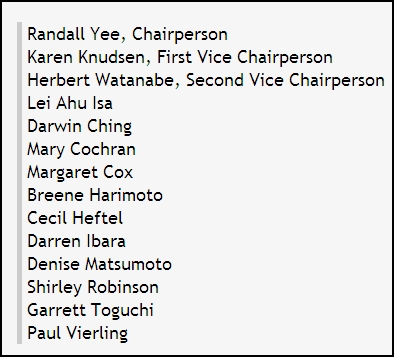
If you are confused by the large number of people running for the Board of Education and having trouble choosing whom to vote for, you might consider cutting out this list of Board members present at the illegal meeting where Jim Shon was fired. So far, not one of them has come forward to say that they did not vote for the firing. So make your own assumptions if this is an important issue to you. Snip on the outline and take it with you to the voting booth as a guide.
Recent articles: Honolulu Advertiser Nov. 3, Star Bulletin Nov. 3, Star-Bulletin Nov. 4, Star-Bulletin editorial Nov. 4 If there was any coverage on Neighbor Islands, someone please let me know so I can post it here.
On Thursday the AG reached an agreement with the Office of Information Practices and concluded that the votes in the secret session that resulted in the firing of Jim Shon should be immediately released.
Most people would take the advice of their attorney you'd think. But not our Board of Education. Are they above the law? Or as today's Star-Bulletin editorial asks perhaps deridingly:
What is it about "immediately" that the board does not understand?At the very least, the Board could use a lesson in civics. And in public relations. The editorial also noted that many people are following this issue:
Shon has a following of supporters who want to know which board members voted for his firing and would like to retaliate at voting booths next Tuesday. They should have that prerogative.Well, the BOE has not contacted me at all since the initial request for public records. The law obligated them to say something within 10 days. I'm still waiting, of course, but no longer holding my breath.
If you are confused by the large number of people running for the Board of Education and having trouble choosing whom to vote for, you might consider cutting out this list of Board members present at the illegal meeting where Jim Shon was fired. So far, not one of them has come forward to say that they did not vote for the firing. So make your own assumptions if this is an important issue to you. Snip on the outline and take it with you to the voting booth as a guide.
Recent articles: Honolulu Advertiser Nov. 3, Star Bulletin Nov. 3, Star-Bulletin Nov. 4, Star-Bulletin editorial Nov. 4 If there was any coverage on Neighbor Islands, someone please let me know so I can post it here.
Tags:
Thursday, November 02, 2006
BOE seems to be defying OIP decision to release minutes of Jim Shon firing
It's Thursday, November 2. According to the OIP decision, the Board of Education was to release redacted minutes to me and another requester by close of business yesterday.
So far, I've heard nothing. I sent a friendly fax to the BOE earlier this morning. Still nothing. In fact, I have received nothing at all from the BOE after I filed my request, even though the law requires that they respond within 10 days to any request for public records.
This Board doesn't seem to mind breaking laws. I'm not an attorney, but it seems to me that if they added an action (i.e., the firing of Jim Shon) to the agenda without public notice, the action itself would appear to be illegal and could be subject to challenge.
Will there be a challenge? Most likely not. Jim has moved on, and there has been a new appointment to his position. If the BOE is allowed to defy the law whenever they want to, you can be sure they'll do it again. An OIP decision has no teeth at present--there have been calls for new legislation to give them enforcement authority--and you can bet that this BOE knows that there will be no consequences to their action. The OIP cannot even slap their wrists with a ruler. So what will prevent them from breaking the law again?
In case voters may want to know which BOE members took part in what may be a number of illegal actions (failure to follow the Sunshine Law, taking an action without public notice, failure to respond to a request for information, failure to comply with OIP decision, etc.) before Tuesday's election, here is a link to the September 7 minutes as published on the BOE website: http://tinyurl.com/y7uf7k.
This is the portion describing the secret Executive Session and those who voted to hold it (they therefore knew what subjects fell within the scope of their discussion):
So far, I've heard nothing. I sent a friendly fax to the BOE earlier this morning. Still nothing. In fact, I have received nothing at all from the BOE after I filed my request, even though the law requires that they respond within 10 days to any request for public records.
This Board doesn't seem to mind breaking laws. I'm not an attorney, but it seems to me that if they added an action (i.e., the firing of Jim Shon) to the agenda without public notice, the action itself would appear to be illegal and could be subject to challenge.
Will there be a challenge? Most likely not. Jim has moved on, and there has been a new appointment to his position. If the BOE is allowed to defy the law whenever they want to, you can be sure they'll do it again. An OIP decision has no teeth at present--there have been calls for new legislation to give them enforcement authority--and you can bet that this BOE knows that there will be no consequences to their action. The OIP cannot even slap their wrists with a ruler. So what will prevent them from breaking the law again?
In case voters may want to know which BOE members took part in what may be a number of illegal actions (failure to follow the Sunshine Law, taking an action without public notice, failure to respond to a request for information, failure to comply with OIP decision, etc.) before Tuesday's election, here is a link to the September 7 minutes as published on the BOE website: http://tinyurl.com/y7uf7k.
This is the portion describing the secret Executive Session and those who voted to hold it (they therefore knew what subjects fell within the scope of their discussion):
A. Evaluation of the Executive Director of the Charter School Administrative OfficeIn case you are making lists of BOE candidates and incumbents to take with you to the voting booth, here are the names of those present at the September 7 meeting:
B. Watson Wyatt Contract
C. Personnel Matters Relating to Kalani High School
D. Personnel Matters Relating to the Civil Rights Compliance Office
E. Legal Issues Relating to Employee Benefits
F. Consultation with the Attorney General on Collective Bargaining Issues
Ms. Knudsen moved, and Mr. Watanabe seconded, that the Board go immediately into executive session to discuss the evaluation of the executive director of the Charter School Administrative Office; to discuss the Watson Wyatt contract; to discuss personnel matters relating to Kalani High School and the Civil Rights Compliance Office; to discuss legal issues relating to employee benefits; and to consult with the Attorney General on collective bargaining issues.
The motion carried unanimously with Dr. Ahu Isa, Mr. Ching, Ms. Cochran, Ms. Cox, Mr. Harimoto, Mr. Heftel, Ms. Knudsen, Ms. Matsumoto, Ms. Robinson, Mr. Toguchi, Mr. Vierling, Mr. Watanabe, and Mr. Yee voting aye. There were no nays or abstentions.
Randall Yee, ChairpersonUntil the BOE releases the redacted minutes, we don't know who voted to remove Jim Shon. However, all of the Board members present aparently participated in the secret meeting at which he was removed, which may have been illegal.
Karen Knudsen, First Vice Chairperson
Herbert Watanabe, Second Vice Chairperson
Lei Ahu Isa
Darwin Ching
Mary Cochran
Margaret Cox
Breene Harimoto
Cecil Heftel
Darren Ibara
Denise Matsumoto
Shirley Robinson
Garrett Toguchi
Paul Vierling
Tags:
Wednesday, November 01, 2006
Update: Nothing received from the Board of Education
The Board of Education was to release the redacted minutes of the closed-door meeting at which it fired Jim Shon, the Executive Director of the Charter School Administrative Office, according to the decision by OIP (see: OIP: Board of Education must release redacted minutes of Jim Shon firing). They were to have done that by close of business today.
So far, I have not heard from them. Maybe they just dropped it in the mail this evening.
The OIP even did all the work for them (see the decision) by cutting out (redacting) what they needn't release.
I'm anxious to see who voted, during this illegal session, to remove Jim Shon. That will certainly influence how I vote in the upcoming election.
So far, I have not heard from them. Maybe they just dropped it in the mail this evening.
The OIP even did all the work for them (see the decision) by cutting out (redacting) what they needn't release.
I'm anxious to see who voted, during this illegal session, to remove Jim Shon. That will certainly influence how I vote in the upcoming election.
Tags: